

• Internet user base crosses massive 1.02 billion mark in India
• TRAI data 1.02 billion confirms strong telecom sector growth
• ARPU rises to ₹194.57 showing positive revenue momentum
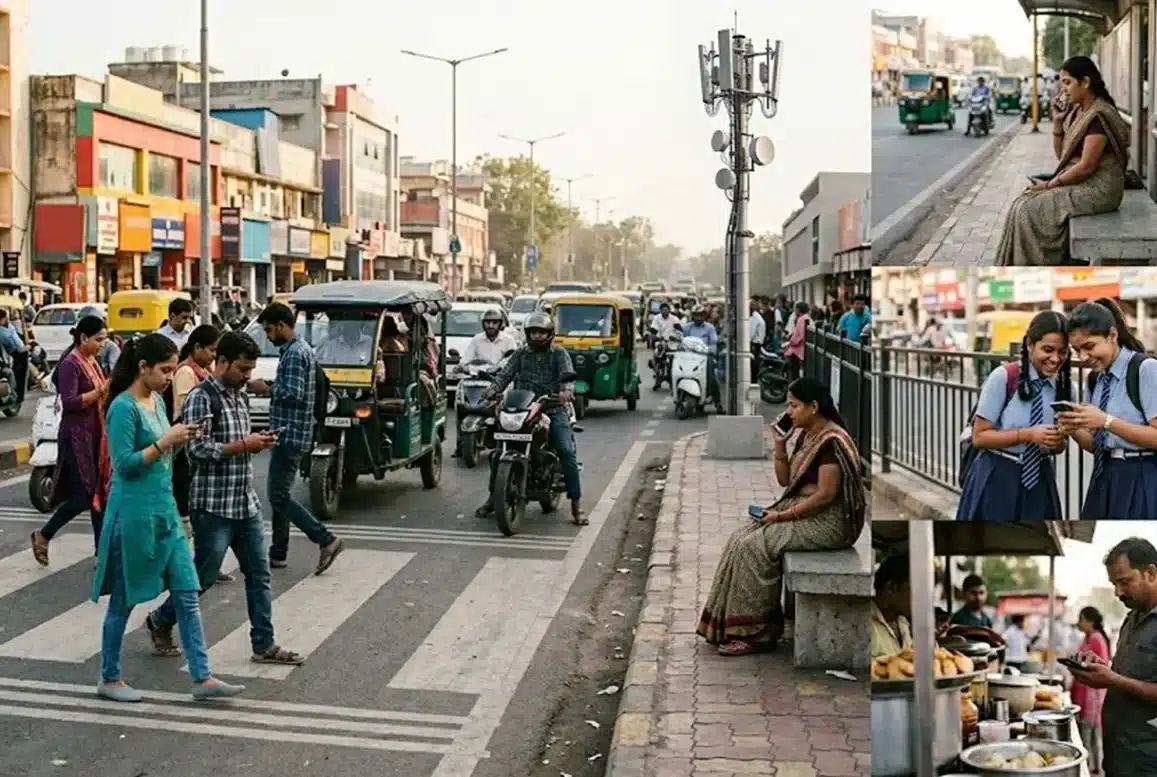
Internet user growth in India has reached a powerful new milestone, as the latest TRAI data 1.02 billion confirms that the country now has more than 1.02 billion active internet connections. This is a significant and positive development for India’s digital journey, reflecting how deeply connectivity has entered everyday life.

From online education and digital payments to OTT streaming and remote work, the role of internet access has expanded rapidly. The December 2025 quarterly report released by the Telecom Regulatory Authority of India clearly highlights that the digital ecosystem is not just expanding, but strengthening across urban and rural regions.
According to the official report, internet users increased from 101.78 crore in September 2025 to 102.86 crore by the end of December 2025. This steady quarterly rise shows that adoption is consistent and demand for data services remains strong.
Also Read: Xiaomi 17 series to Receive Android 21 and HyperOS 8 Updates

Internet user Growth and Trai data 1.02 billion Explained
The Internet user base in India has officially crossed 1.02 billion, marking a new chapter in the country’s telecom growth story. A large portion of this growth is driven by mobile internet adoption. Out of the total users, around 98.32 crore people access the internet via mobile devices, while approximately 4.53 crore rely on wired broadband services.
An interesting and highly positive highlight from the report is that broadband users have now crossed the 100 crore mark. This means high-speed internet is no longer limited to metros or Tier-1 cities. Affordable data plans and improved network infrastructure have contributed significantly to this growth.
Tele-density has also shown impressive improvement. The total number of telephone subscribers increased from 122.89 crore to 130.61 crore within just one quarter. This represents a 6.28 percent growth in three months, which is remarkable for a mature telecom market.
India’s overall tele-density has now reached 91.74 percent, up from 86.65 percent in the previous quarter. Tele-density represents the number of telephone connections per 100 individuals. This improvement indicates deeper penetration of connectivity services across the population.
Wireless users, including mobile and fixed wireless subscribers, now stand at 125.87 crore. This clearly shows that wireless communication remains the backbone of India’s telecom infrastructure.
The financial health of telecom companies has also improved during this period. The total gross revenue of telecom operators in the December 2025 quarter stood at ₹1,02,475 crore. This rise signals a stable and profitable phase for the industry.
Another important indicator is the Average Revenue Per User (ARPU). ARPU increased from ₹190.99 to ₹194.57 during the quarter. This suggests that customers are willing to pay slightly more for improved network quality and better services. The increase may look small, but at a national scale, it reflects strong revenue growth for operators.
Figures as of December 2025
| Category | December 2025 Data |
|---|---|
| Total Internet Users | 102.86 crore |
| Mobile Internet Users | 98.32 crore |
| Wired Broadband Users | 4.53 crore |
| Total Telephone Subscribers | 130.61 crore |
| Wireless Subscribers | 125.87 crore |
| Tele-density | 91.74% |
| Telecom Sector Revenue | ₹1,02,475 crore |
| ARPU | ₹194.57 |
Broadcasting sector data also reflects expansion. The Ministry of Information and Broadcasting has approved 920 private satellite TV channels so far. Among these, 335 are pay-TV channels, while the remaining are free-to-air channels. This indicates continued growth in content consumption alongside digital expansion.
The consistent rise in the Internet user base highlights how digital services are becoming essential rather than optional. Government initiatives, affordable smartphones, competitive data pricing, and rural network expansion have all played important roles.
However, maintaining service quality while handling such massive user volumes will remain a challenge. Network congestion, data speed consistency, and infrastructure upgrades must continue at a steady pace to support future growth.
Looking ahead, the expansion of 5G networks and fibre connectivity in rural regions is expected to push the numbers even higher. If the current momentum continues, India may soon move towards even stronger digital inclusion levels.
The rise of the Internet user base beyond 1.02 billion is a strong and encouraging signal for India’s telecom sector. With TRAI data 1.02 billion confirming steady quarterly growth, the future looks promising for every Internet user in the country.